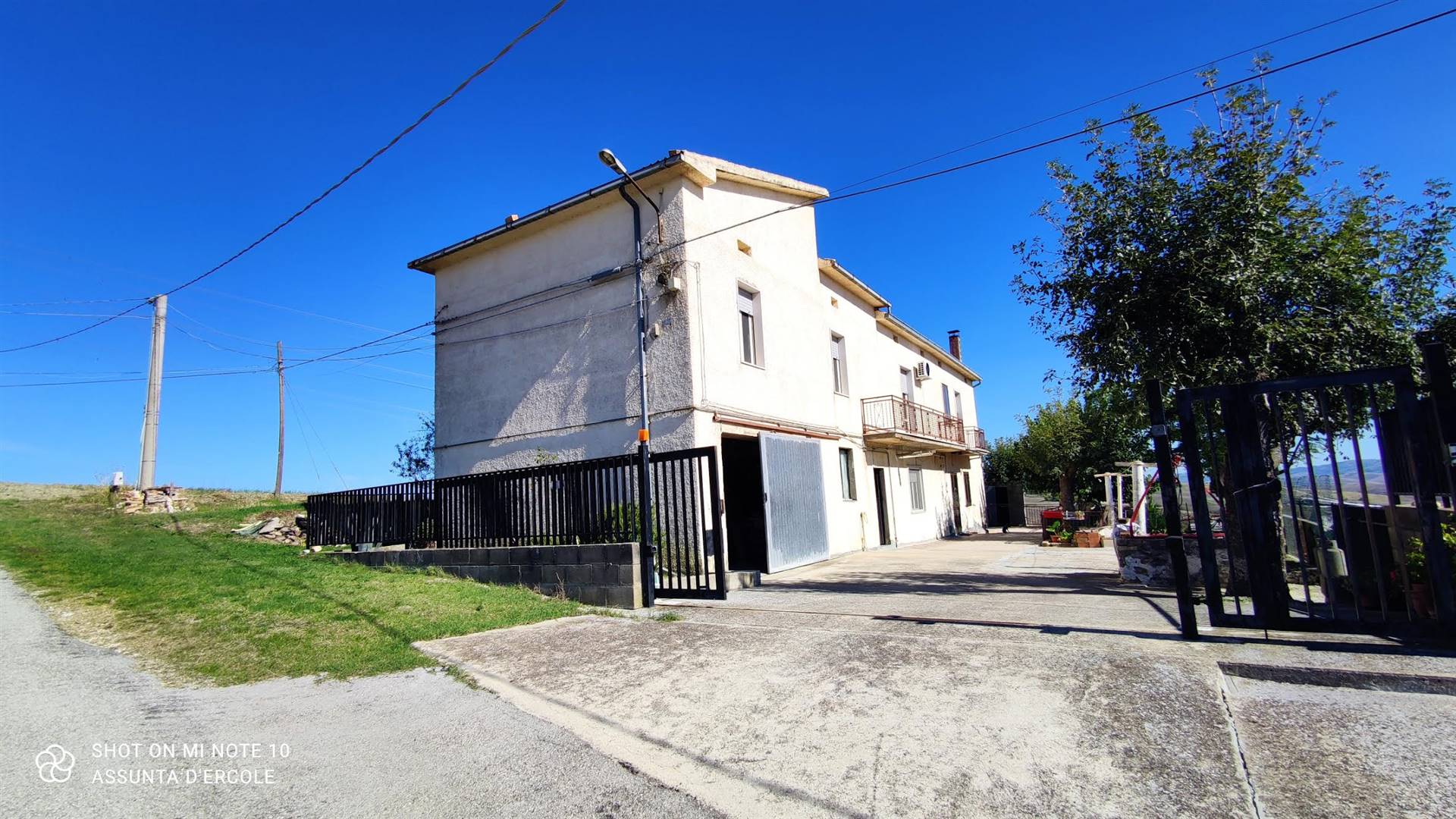
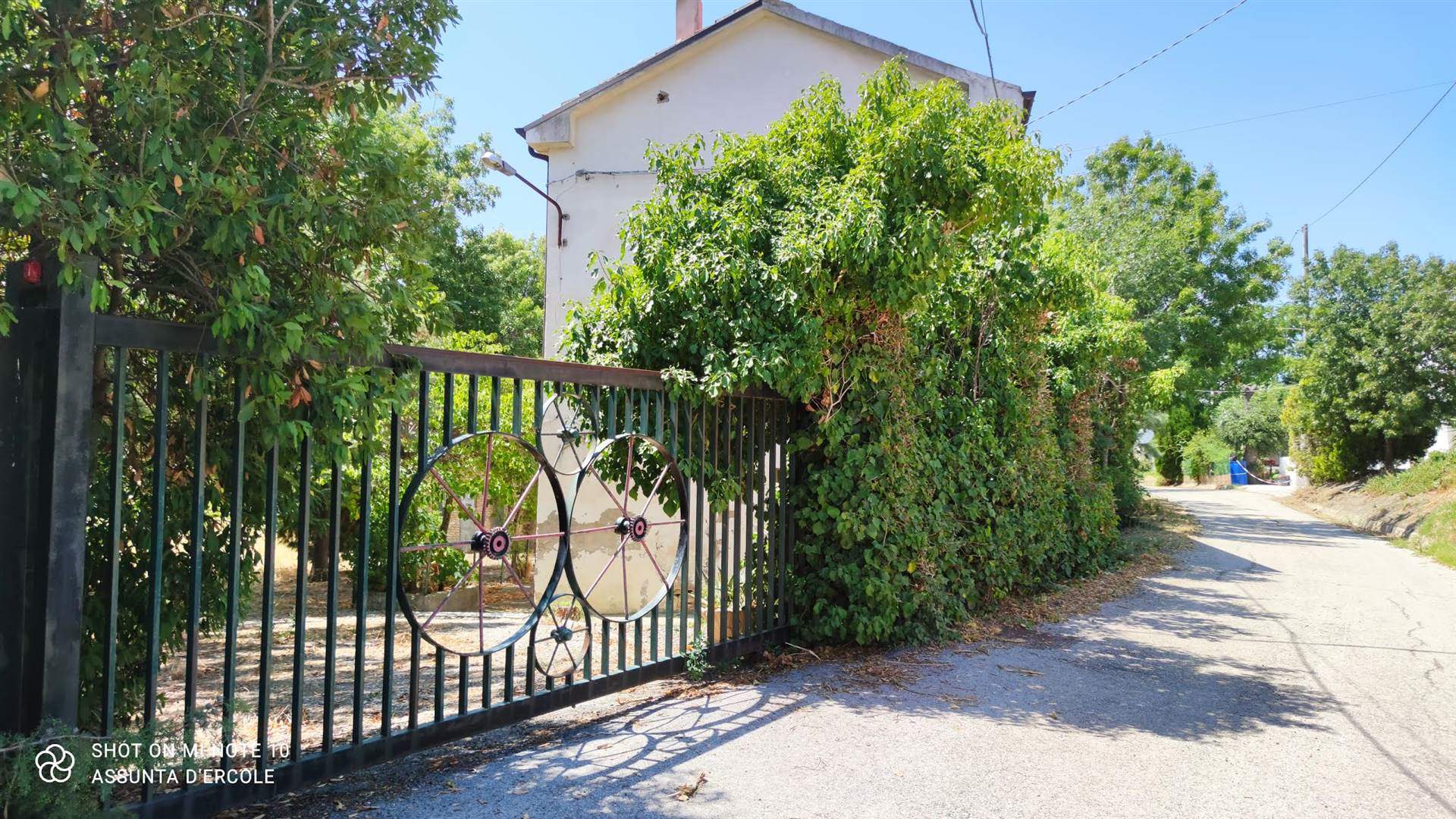
Habitable farmhouse ready to move in, located in a quiet and panoramic peripheral area.
The residence consists of a living room, kitchen, and dining area on the ground floor; two bedrooms, both with balconies, a bathroom, and a small toilet on the first floor; and an attic space in the attic.
Detached from the house, there is a warehouse, a storage room, and two chicken coops.
A garden and land complete the property.
The hillside position offers a fabulous sea view and panoramic scenery. The location is 10 minutes from the nearest towns where you can find all kinds of shops and services.
The proximity to the Adriatic Sea, the train station, and the highway is a plus, as you can enjoy these conveniences in just 30 minutes. For those who love walking or cycling, there is the coastal cycle path of the Trabocchi coast, allowing you to enjoy the varied beauty that the Abruzzo coast offers.
Possibility to purchase the adjacent farmhouse with additional land for 40,000 euros negotiable: click on the link https://immobiliaredercole.com/property/rif-1511-1-atessa-ch-porzione-di-casolare/
Surfaces: residence 125 sqm, attic 55 sqm; storage room 36 sqm; warehouse with fireplace 12 sqm; land 3000 sqm; garden 530 sqm.
Price: Eu.95,000 negotiable with furniture.
Utilities: water, electricity, heating system present but lacking boiler and radiators.
Energy class: G.
Distances: 10 minutes from the town center; 30 minutes from the Adriatic Sea; 1 hour from Pescara airport; 3 hours from Rome airport; 2 hours and 40 minutes from Naples airport; ski resorts of Roccaraso 1 hour and 30 minutes.
Information on Atessa: Altitude 433 m above sea level; Area 110.98 km²; Type of territory Coastal hills; Inhabitants 10,570.
All the reasons to look for a home in Atessa.
Looking for a home in Atessa, in the province of Chieti, means immersing yourself in a world of medieval imprint surrounded by the natural scenery of the Valsangro mountain community, while at the same time enjoying every privilege and comfort offered by modernity. The immense historical and artistic heritage enjoyed by the city, the largest in the province of Chieti, contrasts with the economic development known since the opening of the Honda-Sevel industrial complex. The industrialization process, which began in the 1970s and 1980s, has led the city's economic structure to evolve from a purely agricultural-craft model to the dynamism of a typically industrial society, without giving up a strong identity that makes Atessa a true gem, all to be discovered and experienced.
Atessa, an ancient city of medieval imprint.
The long history of Atessa dates back to the 5th century AD, shortly after the fall of the Western Roman Empire. But it is with the Middle Ages that the city knows its period of greatest flourishing, becoming in the 15th century the preferred location of Queen Joanna II of Naples. After Lanciano, Atessa is the second best-preserved city in the Val di Sangro, with a clear historical imprint evident in the alleys, churches, and palaces. Medieval traces can be found at every corner, even though many structures were modified with terracotta around the mid-18th century, according to the dictates of late Baroque. The current historic center arises from the conurbation of two settlements dating back to the Lombard period (6th century), Ate and Tixa (from which the city takes its name), which today correspond to the districts of Santa Croce and San Michele.
Atessa and its architecture.
To connect the two districts of Atessa is the Cathedral of San Leucio (13th-18th century). The surrounding agglomerations feature the typical helical structure of a city subject to various expansion processes. The houses in Atessa are positioned along the lines of this evolution, dialoguing with the history of the city. The ancient Tixa, now Santa Croce, branches out around Piazza Castello while the outermost ring (Via Menotti de Francesco) serves as a link between Largo Munici.